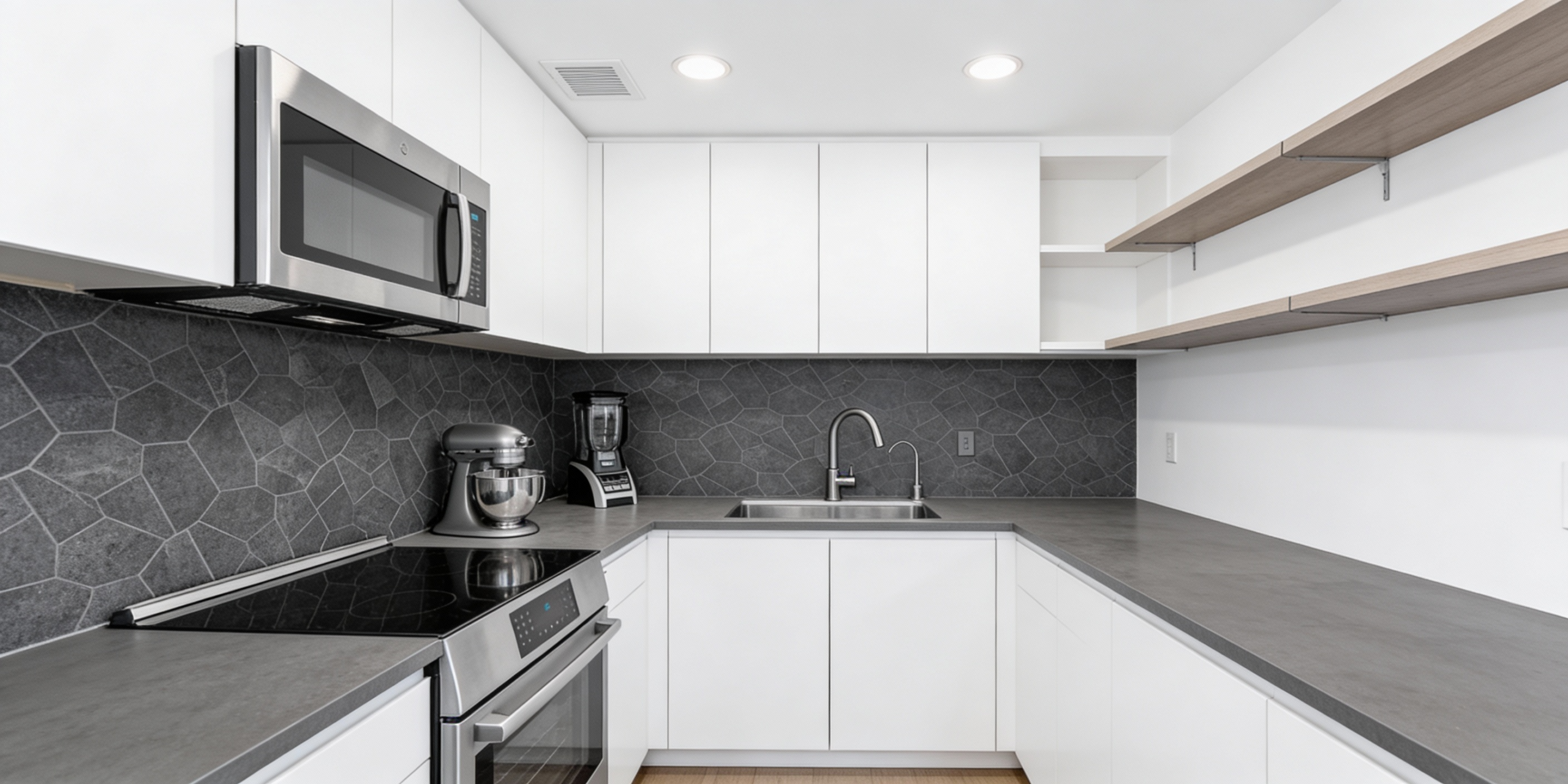
The cabinetry you choose dictates the entire visual aesthetic and functional flow of your kitchen. For homeowners in Haddonfield, Cherry Hill, and Voorhees preparing for a renovation, deciding between bespoke, locally built cabinets and mass-produced prefabricated options is a critical juncture in the planning process. While prefabricated boxes offer speed and lower initial costs, custom joinery provides unparalleled structural durability and design flexibility.
Assessing the Limitations of Prefabricated Cabinets
Prefabricated (or “stock”) cabinets are mass-produced in standard widths, typically in three-inch increments (e.g., 18-inch, 21-inch, 24-inch). Because they must appeal to the broadest possible market, they offer limited wood species, finish colors, and internal storage options.
Wasted Space and Filler Strips
Because stock cabinets only come in fixed sizes, they rarely fit a kitchen’s exact dimensions perfectly. Installers must use blank wooden “filler strips” to close the gaps between the end of a cabinet run and the wall. In a compact kitchen layout, these filler strips represent valuable, wasted storage space that could have been utilized. Furthermore, the construction materials often rely heavily on thin particleboard and stapled joints, which are highly susceptible to swelling and degradation if exposed to sink leaks or high humidity.
The Structural Advantages of Custom Cabinetry
True custom cabinets are built from scratch, explicitly tailored to the exact measurements and architectural nuances of your specific room.
Precision Fit for Uneven Walls
In the historic properties common throughout South Jersey, walls are rarely perfectly straight, and floors are seldom entirely level. Custom cabinet makers scribe the wooden frames to match the exact contours of your walls, creating a flawless, built-in appearance without relying on excessive shims or large filler pieces. Every fraction of an inch is utilized for active storage, from deep corner pull-outs to narrow spice racks flanking the oven.
Superior Hardware and Longevity
The hallmark of a high-quality cabinet is its construction method. Custom boxes are typically built using 3/4-inch furniture-grade plywood framing, solid hardwood doors, and heavy-duty dovetail joinery for the drawer boxes. According to the Architectural Woodwork Institute (AWI), adhering to premium joinery standards ensures that cabinetry can withstand decades of heavy structural loads and repeated impact without racking or sagging. Premium soft-close hinges and under-mount drawer glides provide a smooth, silent operation that mass-produced hardware cannot replicate.
Making the Best Choice for Your Renovation
If your budget is highly restricted and you require an immediate kitchen turnaround, prefabricated cabinets serve a purpose. However, if your goal is to maximize storage efficiency, achieve a specific, uncompromised aesthetic, and invest in materials that will last the lifetime of the home, bespoke joinery is the clear winner. To explore wood species, finishes, and storage solutions tailored to your cooking habits, discover the benefits of premium custom cabinetry in Haddonfield with our design team. Contact Haddonfield Kitchen & Bath Remodelers to start drafting your ideal kitchen layout today.
FAQs:
- How long does it take to get custom cabinets made? Because they are built to order from raw materials, custom cabinetry typically requires an 8 to 12-week lead time from final measurement to delivery.
- Are custom cabinets really made of better materials? Yes. Custom builders use thick, furniture-grade plywood for the structural boxes and solid hardwoods for the faces and doors, avoiding the fragile particleboard common in stock cabinets.
- Can custom cabinets be matched to any paint color? Absolutely. Unlike stock cabinets which come in limited factory finishes, custom cabinetry can be color-matched and sprayed to any precise paint specification you desire.