Haddonfield’s rich architectural history is defined by charming Victorians, sturdy Colonials, and mid-century modern properties. However, kitchens designed a century ago were built as isolated, utilitarian workspaces hidden at the back of the house. Today, the kitchen serves as the social center of the home. Integrating an open, modern kitchen layout into a historic property in Haddonfield or Haddon Heights requires careful structural planning and a deep respect for the home’s original character.
Overcoming Layout Constraints in Older Homes
Historic floor plans are characterized by numerous small, compartmentalized rooms. Modern homeowners heavily favor open-concept spaces with large central islands and seamless transitions into dining and living areas. Achieving this flow requires significant structural modification.
Structural Load-Bearing Walls
Removing walls to open up a historic kitchen is rarely a simple task. Many interior walls in older properties are load-bearing, meaning they support the weight of the second floor and the roof. Removing these walls safely requires installing heavy structural steel beams or engineered wood headers to carry the overhead load. A specialized design-build team ensures that these structural alterations are calculated precisely by engineers, preventing catastrophic sagging or structural failure.
Updating Electrical and Plumbing Systems
A century ago, kitchens required only a single electrical outlet and a basic cold-water plumbing line. Today’s modern culinary spaces demand dedicated circuits for induction cooktops, double wall ovens, heavy-duty ventilation hoods, and smart appliances. During a remodel, the walls are opened, providing the critical opportunity to completely replace outdated knob-and-tube wiring and cast-iron plumbing. The National Park Service’s Preservation Guidelines suggest that updating mechanical systems is vital for the safety and longevity of historic structures, provided the exterior architectural integrity is maintained.
Selecting Historically Appropriate Materials
A successful renovation modernizes the functionality of the kitchen without making it feel totally disconnected from the rest of the historic home. Selecting the right materials bridges the gap between old and new.
Cabinetry and Millwork
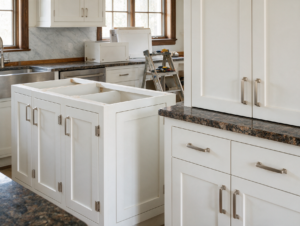
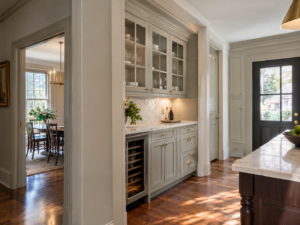
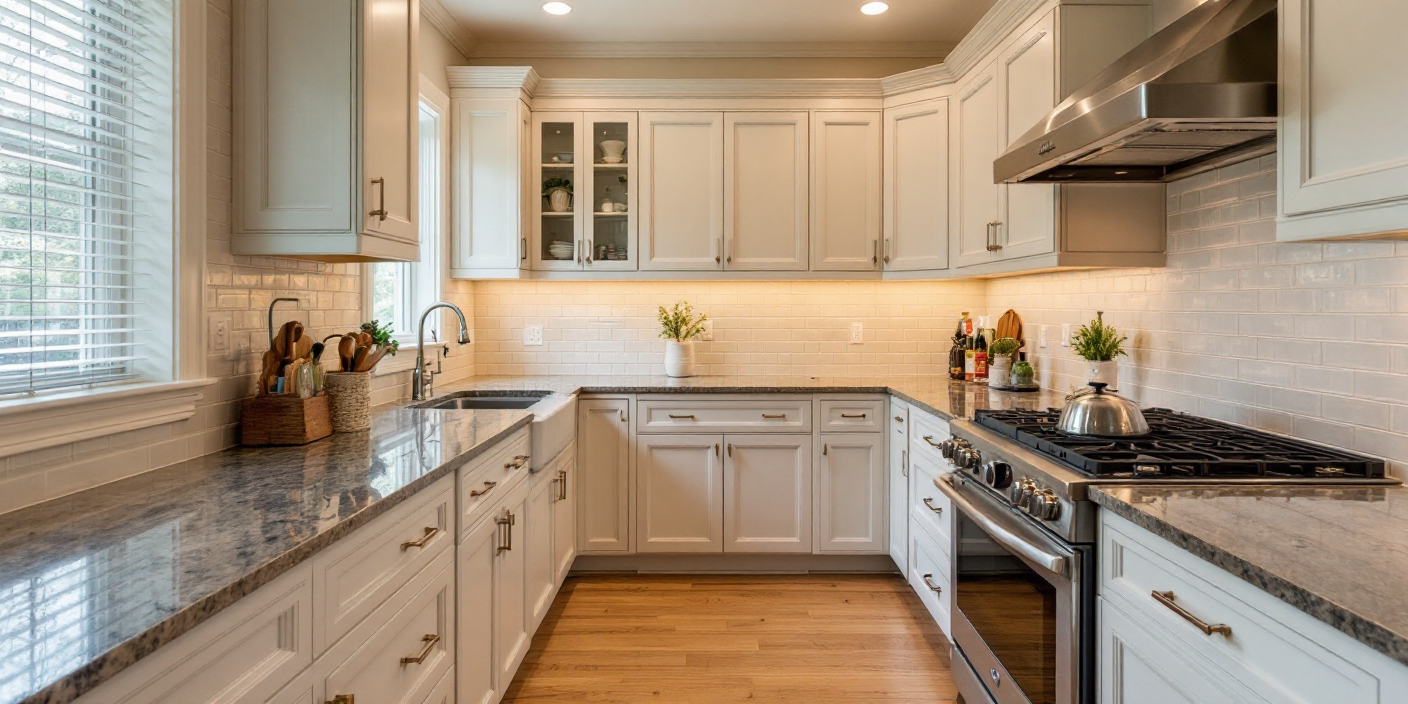
Using custom cabinetry allows designers to replicate specific architectural details found elsewhere in the house, such as matching the crown molding profiles or door panel styles. Inset cabinets—where the door sits flush inside the cabinet frame—provide a historically accurate, furniture-like appearance that complements older architecture perfectly, while still hiding modern conveniences like pull-out trash bins and soft-close drawer glides.
Countertops and Flooring
Natural materials resonate best within historic spaces. Soapstone, honed granite, and marble countertops offer a timeless aesthetic that ages gracefully. For flooring, restoring the original wide-plank pine hidden beneath layers of old linoleum is ideal, but if the original floor cannot be salvaged, installing new hardwood that matches the home’s existing species and stain creates a cohesive flow.
Achieving a Seamless Kitchen Transformation
Renovating a historic property is a complex process that demands specialized experience. Navigating uneven floors, out-of-plumb walls, and strict municipal building codes requires a contractor who understands the nuances of older construction. By balancing structural integrity with high-end design, you can achieve a space that performs beautifully for modern living. To explore the possibilities for your historic property, contact our team to discuss modern kitchen remodeling in Haddonfield and begin planning a timeless upgrade.
FAQs:
- Can I safely remove walls in my historic Haddonfield home? Yes, but if the wall is load-bearing, a structural beam must be properly engineered and installed to support the weight of the floors above before the wall is removed.
- How do I make a new kitchen match my 100-year-old house? Use historically sympathetic materials like inset cabinetry, soapstone or honed marble counters, and architectural molding that matches the original trim found in other rooms.
- Will I need to update my electrical panel for a new kitchen? Almost certainly. Modern kitchens require multiple dedicated circuits for high-draw appliances, which usually necessitates a heavy-up to a 200-amp electrical service panel.