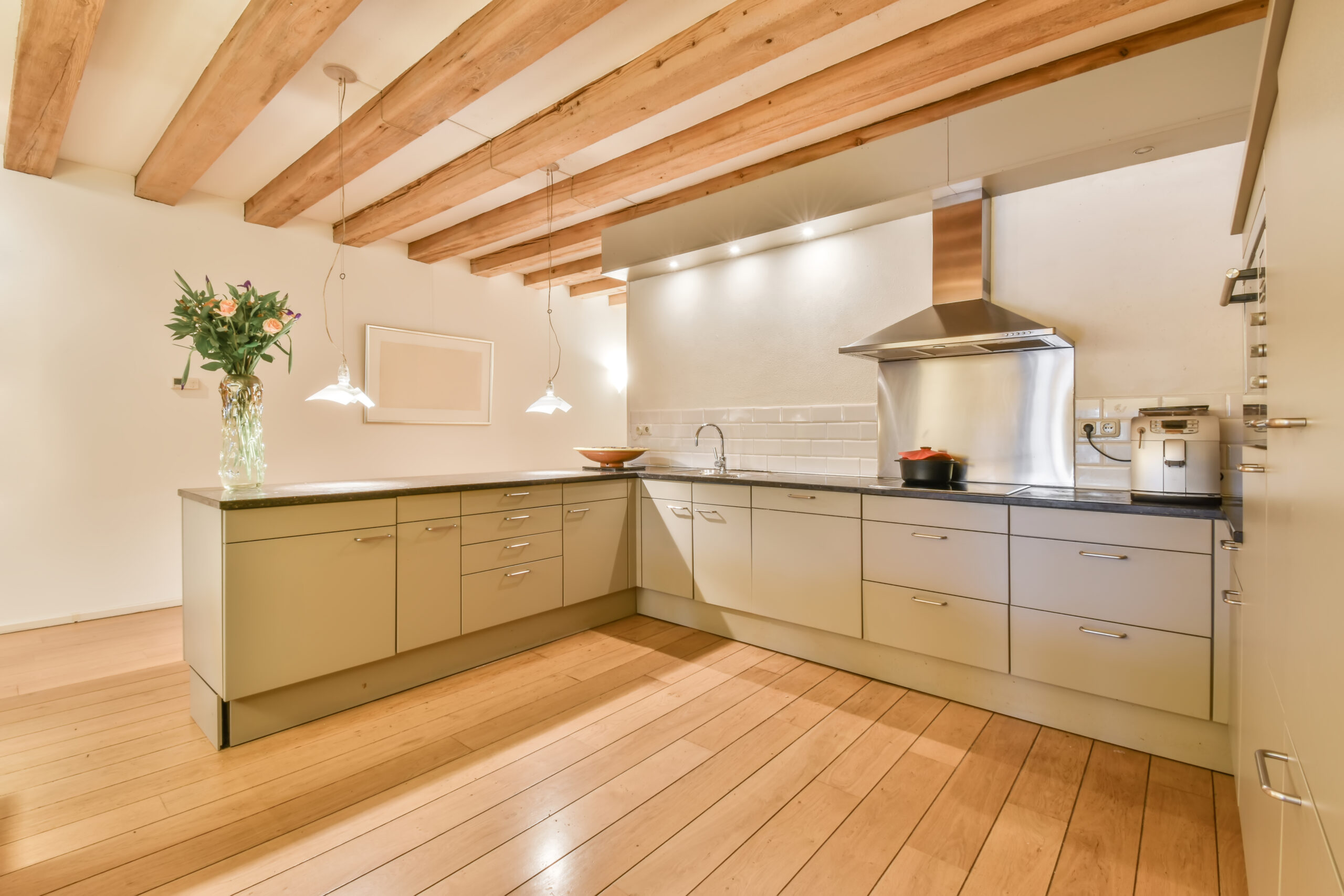
In a thoughtfully remodeled historic kitchen, a large stainless-steel refrigerator can sometimes dominate the room.
Panel-ready appliances provide another option.
These refrigerators, dishwashers, and other appliances accept custom cabinet panels so they visually integrate with the surrounding cabinetry.
The result can be especially attractive in Haddonfield homes where homeowners want modern performance without making the room feel overly contemporary.
But achieving the built-in appearance requires more than ordering a cabinet panel.
Choose the Appliance Before Finalizing Cabinets
Panel-ready appliances are highly model-specific.
The manufacturer determines the required opening, panel thickness, panel weight, hinge clearances, ventilation space, toe-kick configuration, and hardware placement.
Cabinet drawings should therefore be based on the exact appliance specifications.
Designing cabinetry first and choosing the refrigerator later can create expensive conflicts.
Haddonfield Kitchen & Bath Remodelers’ kitchen remodeling services can coordinate cabinetry and appliance planning as one system.
Flush Integration Requires Precise Depth
A standard freestanding refrigerator often projects beyond the cabinet faces.
A true integrated appliance is designed differently, but achieving a flush appearance still depends on wall conditions, cabinet depth, handles, panel thickness, hinge swing, and installation clearances.
In an older Haddonfield house, walls may also be slightly out of square.
Those conditions need to be measured before cabinetry is fabricated.
Door Swing Is Easy to Overlook
A refrigerator that looks perfectly integrated while closed may still need substantial clearance when its doors open.
Nearby walls, tall pantry cabinets, islands, casing, or countertops can interfere with door swing.
If the doors cannot open far enough, interior drawers or shelves may also become difficult to remove.
The appliance installation manual should be checked during layout—not after delivery.
Custom Panels Must Match the Cabinet System
The appliance panel is part of the cabinetry design.
Its rail and stile dimensions, finish, reveal, handle position, and alignment should relate to neighboring doors.
Even small inconsistencies become noticeable when the refrigerator sits within a continuous cabinet elevation.
For historic-inspired kitchens, a restrained panel style may help modern equipment blend into traditional architecture without pretending the appliance itself is historic.
Ventilation and Service Access Still Matter
Making an appliance visually disappear does not eliminate its mechanical requirements.
Refrigeration equipment must be installed according to manufacturer ventilation and clearance specifications.
Service access should also be considered.
A beautiful built-in installation becomes a problem if routine maintenance requires dismantling surrounding cabinetry.
Dishwashers Benefit From the Same Planning
Panel-ready dishwashers can create a particularly seamless base-cabinet run.
But panel dimensions, handle placement, floor clearance, adjacent cabinet hardware, and toe-kick alignment still require coordination.
Heavy custom panels must remain within the appliance manufacturer’s permitted specifications.
Historic Character and Modern Function Can Coexist
The purpose of integrated appliances is not simply to follow a luxury trend.
In the right Haddonfield kitchen, they can reduce visual clutter and let original architectural elements—or carefully designed traditional cabinetry—remain the focus.
New Jersey remodeling work must also comply with applicable state and local requirements. Homeowners can review code information through the New Jersey Department of Community Affairs.
FAQ
What does panel-ready mean?
It means the appliance is designed to accept a custom decorative front that coordinates with cabinetry.
Can any refrigerator receive cabinet panels?
No. The appliance must be specifically designed for panel installation unless the manufacturer provides an approved system.
Should appliances be selected before cabinets?
For panel-ready installations, yes. Exact specifications are critical to cabinet design.
Are integrated appliances completely flush with cabinetry?
That depends on the appliance type, cabinet system, panel design, and installation specifications.
CTA: For a Haddonfield kitchen where modern appliances need to coexist with traditional architecture, detailed planning before cabinet fabrication makes the difference between “almost built-in” and truly integrated.